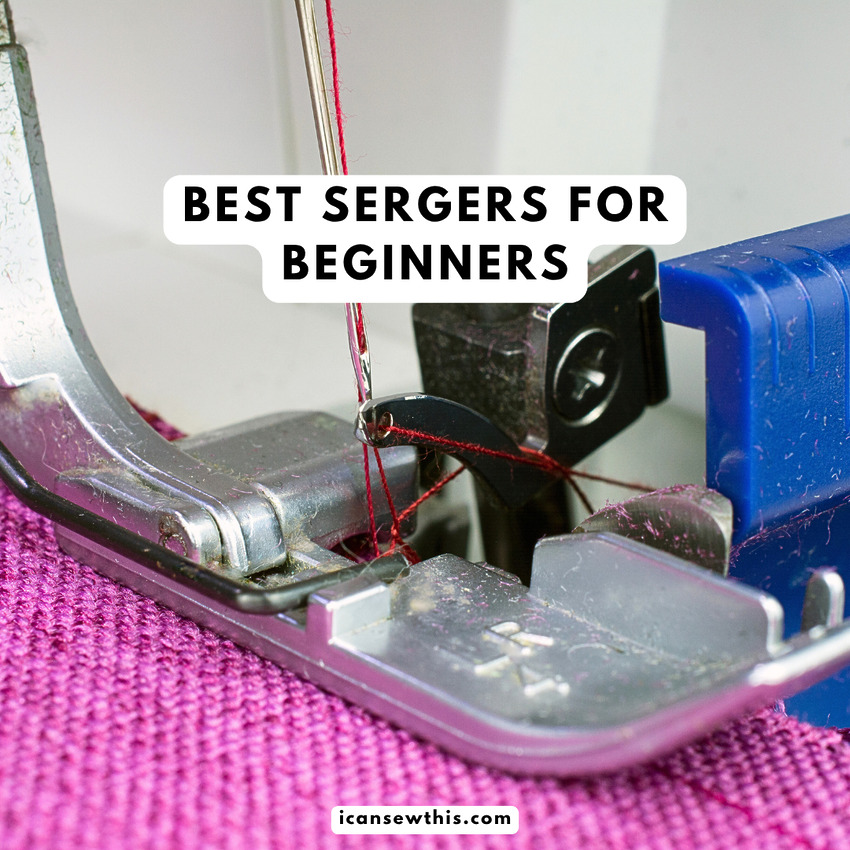
Ready to level up your sewing? Finding the best sergers for beginners can feel tricky, but it’s the fastest way to move from “homemade” to “professional.” I’ve pulled together the top 3 most reliable and easy-to-use overlock machines for 2026.
What is a serger and why do you need one?
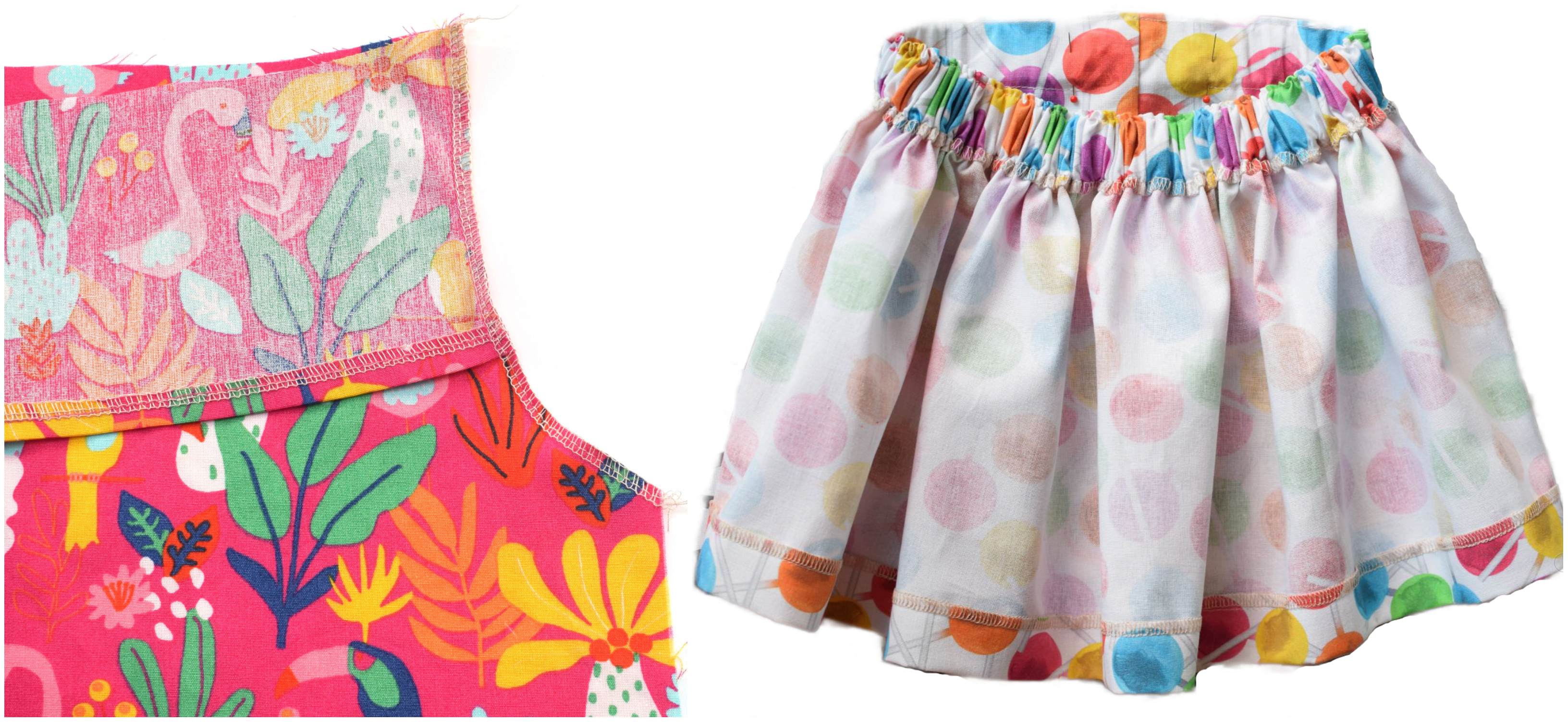
A serger (or overlock machine) is a specialized sewing machine that uses 3 to 4 threads to wrap around the edge of the fabric.
Unlike a standard sewing machine, a serger trims the excess seam allowance as it sews. This creates the clean, stretchy, and durable finish you see on the inside of store-bought t-shirts and leggings.
Key benefits:
- Professional finish: Prevents fraying permanently.
- Speed: Sergers sew up to twice as fast as regular machines.
- Stretch: Essential for sewing knit fabrics without the seams popping.
Best beginner sergers at a glance
| Model | Best for… | Max speed |
| Brother 1034D | Best Overall | 1,300 SPM |
| Singer ProFinish | Best Versatility | 1,300 SPM |
| Juki MO-654DE | Best Heavy Duty | 1,500 SPM |
Top 3 beginner overlock machines for 2026
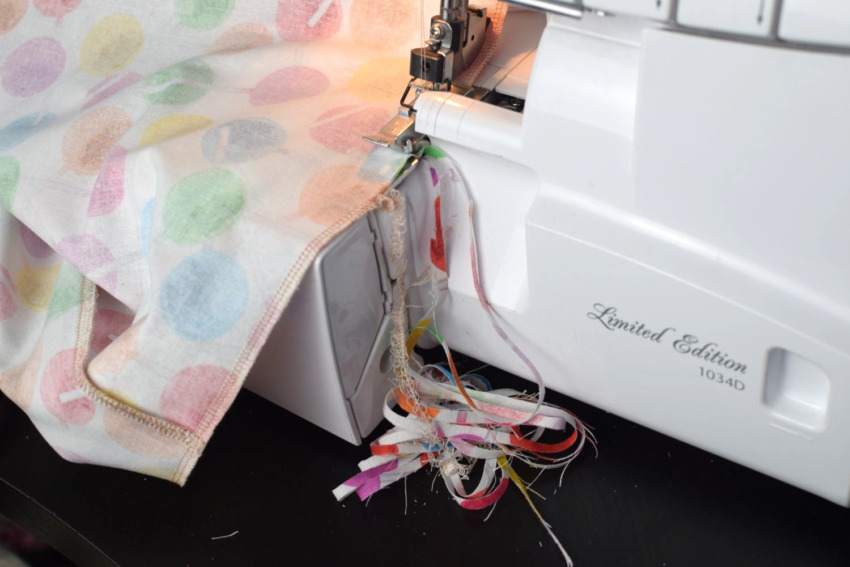
Best Overall – Brother 1034D serger
The Brother 1034D is a legend in the sewing community. It’s a reliable workhorse that offers incredible value for the price.
- Why it’s great for beginners: There is a massive community around this machine. If you get stuck, you can find thousands of YouTube tutorials and Facebook groups dedicated specifically to this model.
- Pros: Easy color-coded threading; widely available parts.
- Cons: It can be a bit noisy compared to high-end models.
Best versatility – SINGER | ProFinish 14CG754
This machine is perfect if you want to experiment with different finishes. It handles 2, 3, or 4 thread stitches, making it great for everything from heavy denim to delicate rolled hems on scarves.
- Why it’s great for beginners: It features an optional “free arm,” which makes it much easier to sew small openings like sleeves or baby clothes.
- Pros: 2-thread capability for fine rolled hems; adjustable stitch length.
- Cons: Threading the lower looper can take a bit of practice.
Best heavy duty – Juki MO-654DE Overlocker/Serger
If you plan on sewing thick layers or intend to sew for hours every day, the Juki is the winner. Juki is famous for industrial-grade tension and cutting systems.
- Why it’s great for beginners: It’s incredibly stable. While other machines might “dance” on your table at high speeds, the Juki stays put and runs quietly.
- Pros: Industrial-quality knife; very high speed (1,500 SPM).
- Cons: Higher price point than Brother or Singer.
Common serger questions (FAQ)
Is a serger harder to thread than a sewing machine? It has more thread paths (usually 4), but modern machines use color-coded diagrams printed right on the frame. Once you do it three times, it becomes muscle memory.
Do I still need a regular sewing machine if I have a serger? Yes. A serger cannot do topstitching, buttonholes, or zippers. Think of them as a team: the serger finishes the inside, and the sewing machine handles the outside.
What thread should I use for a serger? Always use “cone thread” rather than standard spools. Sergers use a lot of thread quickly, and cones are designed to feed smoothly at high speeds.
Why is my serger skipping stitches? In 90% of cases, this means your needles are dull or slightly bent. Serger needles work much harder than standard sewing machine needles, so try replacing them with fresh ones. If that doesn’t work, check that the needles are pushed all the way up into the needle bar.
How do I fix “wavy” or “puckered” seams? This is where the differential feed comes in. If your fabric is stretching out and looking wavy, turn the differential feed dial to a higher number (1.5 or 2.0). If the fabric is gathering or puckering, turn it to a lower number (0.6 or 0.8).
What happens if I sew over a pin? Stop immediately! Unlike a regular sewing machine, a serger has a cutting blade. If the blade hits a metal pin, it can chip or dull the knife instantly, and metal shards could fly into the internal gears. Always pull your pins out well before they reach the presser foot.
How do I finish the “thread tail” at the end of a seam? Since a serger doesn’t have a “backstitch” button, you have a few options:
- “Serge off” the edge, flip the fabric, and serge back over the tail for about an inch.
- Use a large-eye darning needle to weave the tail back into the seam.
- Put a drop of seam sealant (like Fray Check) on the end and trim it.
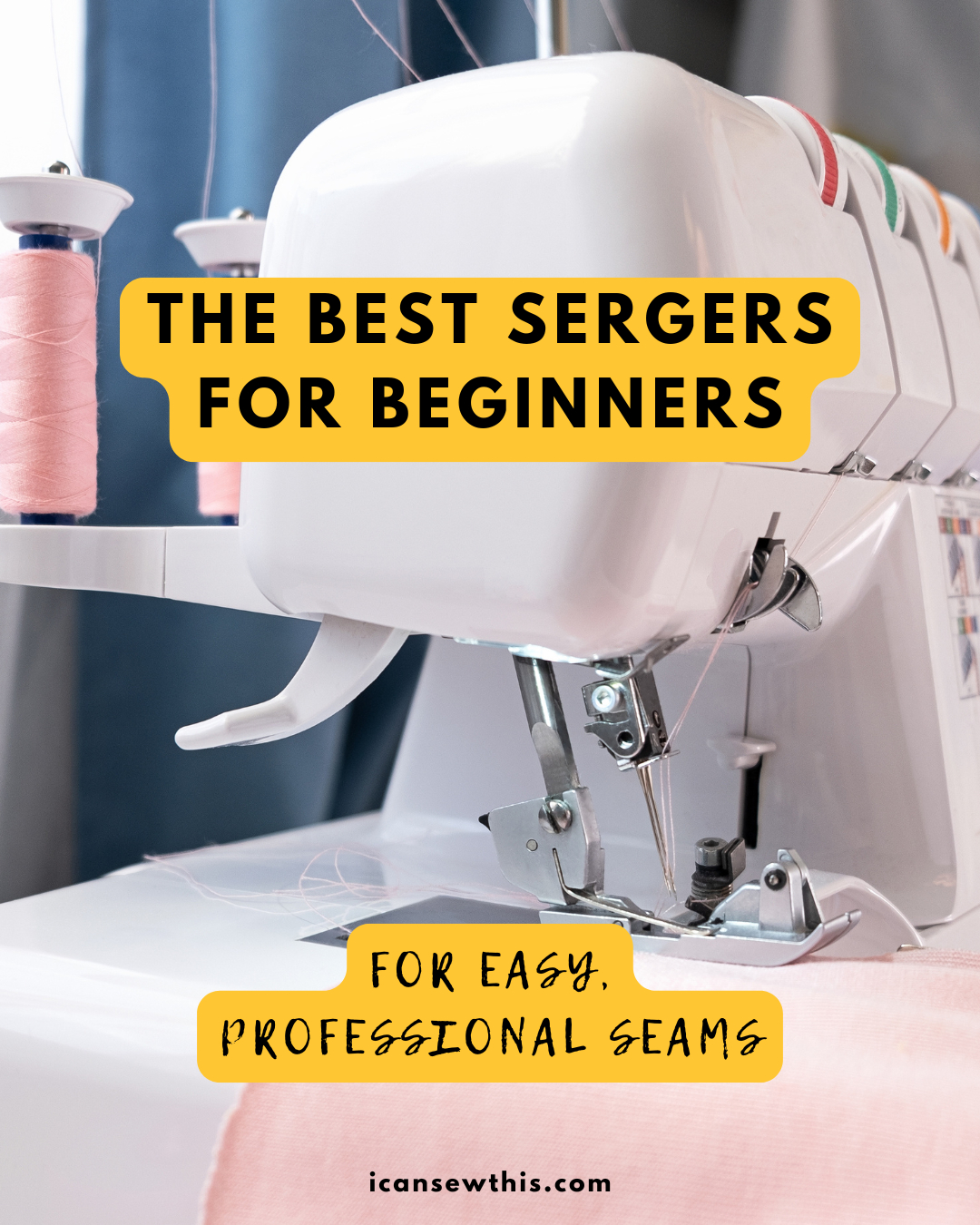
Choosing your first serger is a total game-changer for your sewing journey. While it might look intimidating with all those thread paths and high speeds, the professional results are worth every minute of the learning curve.
Whether you go with the community-favorite Brother, the versatile Singer, or the heavy-duty Juki, you’re investing in a tool that will make your handmade clothes look and feel store-bought. So, take a deep breath, grab some scrap fabric, and get ready to see your projects transform!
Let’s keep in touch! You can find me on Facebook, Instagram, and Pinterest.
Related posts