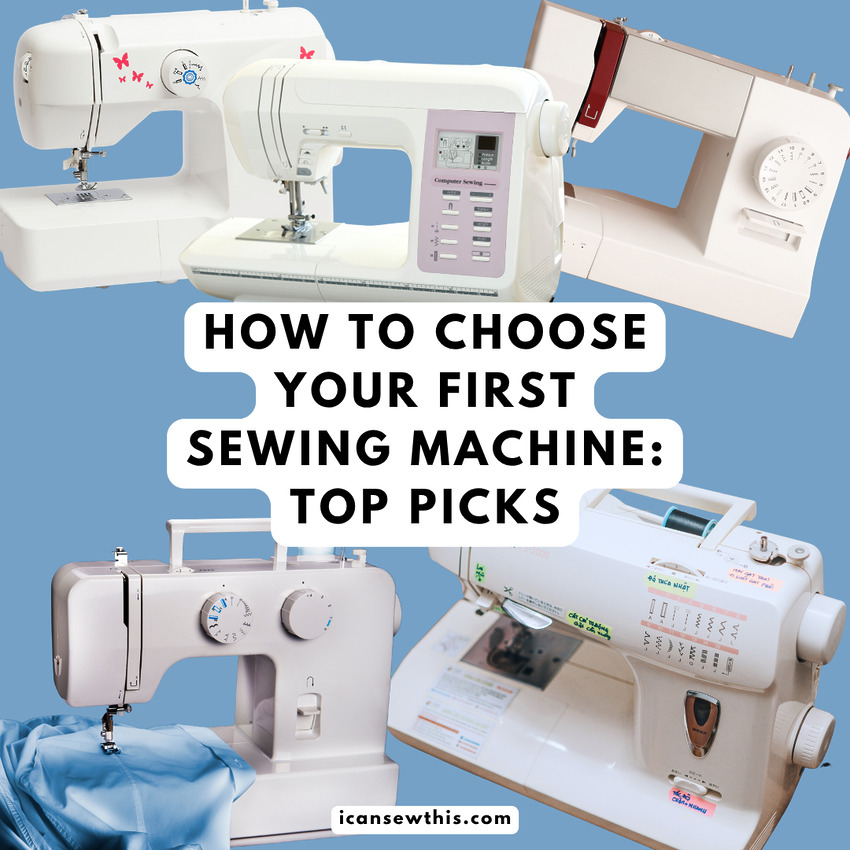
Ready to start sewing? Choosing your first machine is a big step, but it doesn’t have to be confusing. Whether you want to quilt, make clothes, or just hem pants, the right tool makes all the difference.
Below is a quick look at the top-rated beginner models for 2026.
| Machine | Best for… | Key feature |
| Brother CS7000X | Overall Winner | 70 Stitches + Quilting Table |
| Singer 4423 | Heavy Duty | High-speed motor (1,100 spm) |
| Janome 2212 | Durability | All-metal internal frame |
| Singer MX231 | Budget Pick | Lightweight & 97 applications |
| Brother CS5055 | Portability | Weighs only 10.5 lbs |
How to choose a beginner sewing machine: a buyer’s guide
Before you buy, think about these three factors to ensure your machine grows with your skills:
- Mechanical vs. computerized: Mechanical machines (like the Janome 2212) use knobs and are very durable. Computerized models (like the Brother CS7000X) offer automated stitching and LCD screens, which can be easier for total novices.
- Fabric weight: If you plan to sew denim or leather, you need a “Heavy Duty” motor. Standard machines are best for cotton, linen, and knits.
- Stitch variety: You really only need five basics: straight, zigzag, blind hem, buttonhole, and basting. Don’t pay extra for 200 stitches you’ll never use.
The 5 best sewing machines for beginners in 2026
Best Overall – Brother CS7000X
This is the gold standard for new sewers because it’s a “hybrid” that handles both garment sewing and quilting. It comes with a wide extension table which is a lifesaver for large projects.
- Pros: Very intuitive; includes 10 sewing feet; automatic needle threader.
- Cons: The plastic frame feels less “rugged” than mechanical alternatives.
Best for Heavy-Duty Projects – Singer 4423
If you want to sew curtains, denim jackets, or leather bags, this is your machine. It’s faster than most beginner models, sewing up to 1,100 stitches per minute.
- Pros: Powerful motor; stainless steel bedplate for smooth fabric flow.
- Cons: It can be loud; the high speed takes some practice to control.
Best for Durability – Janome 2212
This is a “buy it for life” mechanical machine. It doesn’t have a screen, but its metal interior makes it incredibly reliable and easy to repair.
- Pros: Simple to maintain; high-quality stitch consistency.
- Cons: Limited to 12 stitches; no automatic buttonhole feature.
Best Budget Starter – Singer MX231
An affordable entry point that doesn’t feel like a toy. It’s great for basic repairs and simple projects like pillowcases or tote bags.
- Pros: Very affordable; lightweight; easy to thread.
- Cons: Struggles with very thick layers of fabric.
Best for Classes – Brother CS5055
If you’re taking your machine to a local sewing circle or class, you want this one. It packs full computerized features into a frame that weighs about as much as a gallon of milk.
- Cons: The lightweight design can “walk” or vibrate on the table during high-speed sewing.
- Pros: Extremely portable; bright LED workspace; quiet operation.
Common beginner questions (FAQ)
Is a computerized or mechanical sewing machine better for a beginner? Computerized machines are often easier because they automate things like needle positioning and stitch width. However, mechanical machines are usually more durable and easier to fix.
What is the easiest sewing machine to learn on? The Brother CS7000X is widely considered the easiest because the LCD screen tells you exactly which presser foot to use for each stitch.
Can a beginner use a heavy-duty sewing machine? Yes. In fact, if you plan to sew thick fabrics, a heavy-duty machine like the Singer 4423 is actually easier to use because it won’t jam or skip stitches on tough seams.
What accessories do I need to buy with my first machine? Most beginner machines come with a starter kit, but you’ll definitely need a pack of spare bobbins, a seam ripper (for mistakes!), high-quality polyester thread, and a variety pack of universal needles (70/10 or 80/12 sizes).
Do I need a walking foot? If you plan to sew stretchy knits (like t-shirts) or thick quilts, a walking foot is a game-changer. It feeds the top and bottom layers of fabric through the machine at the same speed so they don’t shift or pucker.
How often should I service my sewing machine? For casual use, aim for a professional tune-up once a year. However, you should “home-service” it every few projects by using a small brush to remove lint from the bobbin area and changing your needle every 8 hours of sewing time.
Can I use a vintage machine as a beginner? While vintage metal machines are beautiful and tough, they often lack modern safety features and can be hard to find parts for. For a first machine, a modern model is usually better because it’s lighter and comes with a manual you can actually find online.
You might also like:
- 50 easy sewing projects for beginners
- 22 cool sewing tools and gadgets you need to try
- The best sergers for beginners
Let’s keep in touch! You can find me on Facebook, Instagram, and Pinterest.
Hello! I simply would like to offer you a big thumbs up for
your excellent information you have got right here on this post.
I’ll be coming back to your blog for more soon.
Awesome post! Keep up the great work! 🙂